

About Sources
About Sources
Staebl.academy learning sessions are created in collaboration with subject matter experts (SME’s) and technical requirements of referenced sources*.
*These sources may include Standards, Regulatory Instruments, User and Industry Group Studies and research from:

Senate Inquiry into non-conforming building products tabled its final report on 23 April 2020 (Master Builders Australia, Submission 125, p. 26):
“There is a common lack of guidance information on how to use a building product in practice and no information about the best evidence or way to educate a consumer on how a product should be used.”
Staebl.academy seeks to be this change and provide guidance information for you, your team, and the built environment that you design or manage.
Staebl.academy is not a substitute for owning and using Standards with Compliance Regulations.
Staebl.academy is complementary.

Staebl.academy is not attempting to replace certifiers or suggest that you should go-it-alone. Certifiers and industry accredited Consultants are charged by law to administer regulatory requirements and do need to rely upon the information provided to them.
Staebl.academy’s purpose is to help you to manage and deliver such information to Certifiers and Industry accredited Consults, including the entire supply chain, from design and specification to maintenance and resource reclamation. We are enablers joining at these intersections.
Staebl.academy's learning and design sessions are referenced and documented.
We provide real-life scenarios placing conformance information in context and application, forming a staebl foundation that you can build upon with your expertise.
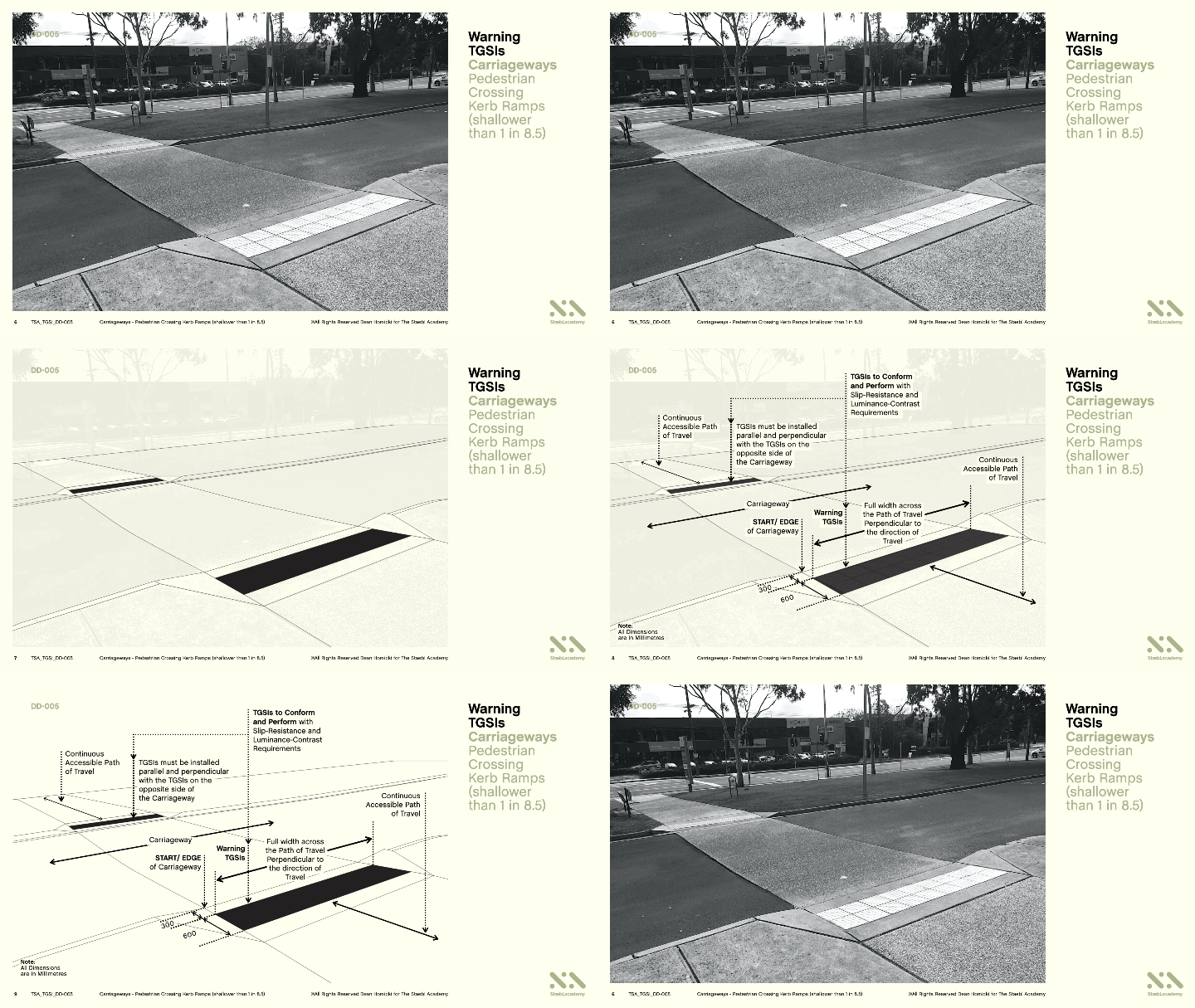
We behave as coaches, instructors who have a desire to enhance your skills, talents and professional expertise.
We want to assist you know why, how and what to do, where and when it needs to be done to achieve conformance and practical outcomes.
Frequently Asked Questions
General
-
Stæbl Academy is the learning and design resource platform created by Stæbl PL. It helps people involved in the design, construction and ongoing care of the built environment better understand the accessibility decisions they make and how others may experience those decisions. The Academy brings together disability awareness, technical guidance and observations from professional practice. Its resources are designed to help people recognise how accessibility is shaped across an entire system, from early design and specification through construction, handover and continuing maintenance. Architects, designers, specifiers, access consultants, engineers, surveyors, certifiers, facility managers, manufacturers, suppliers, installers, workers and duty holders can use the Academy as part of their everyday work or continuing professional development. Learning resources can be watched, listened to, read and revisited whenever they are needed. Videos are supported by closed captions, transcripts, audio and visual resources to make learning easier to access in different places, at different times and in different ways.
-
There are no paid memberships or subscriptions required to use Stæbl Academy. Its learning and design resources are freely available as part of Stæbl's commitment to sharing practical knowledge that can support more accessible, considered and enduring built environments. The Academy includes short learning sessions, technical explanations, design diagrams, field observations and practical resources contributed by people with relevant professional and lived experience. Subjects include disability awareness, accessibility standards, product conformance, luminance contrast, tactile ground surface indicators, stairways and the continuing care of accessibility features after construction. New resources will continue to be added as Stæbl observes, tests and learns from the evidence left by real projects. Visitors are welcome to use, revisit and adapt the available knowledge to support better conversations and more informed decisions in their own professional practice.
-
Stæbl Academy resources can be accessed online through staebl.com. You can explore a subject when a question arises, return to a technical detail during a project or revisit a learning session when preparing for a conversation with a client, contractor or custodian. The resources can be viewed on an internet-connected smartphone, tablet, laptop or desktop computer. Each subject is arranged so that you can search, select and learn at your own pace rather than having to complete a prescribed course sequence. Search, select and begin with the learning or design scenario that is most relevant to the decision in front of you.
-
The most useful place to begin is often with the question you are already trying to resolve. You may be considering how someone with low vision will recognise a stairway, whether an installed product continues to conform, or how an accessibility decision will be carried from the drawing into construction and ongoing maintenance. Stæbl Academy includes resources for people who are beginning to learn about disability access, as well as those who already work with accessibility standards, construction requirements and product specifications. Each session is intended to make a particular subject easier to notice, understand and apply without assuming that every visitor has the same experience or professional background. You can explore subjects including disability awareness, tactile ground surface indicators, luminance contrast, stair edging, slip resistance, product conformance and post-construction custodianship. The catalogue will continue to grow as further field evidence, professional knowledge and User experience become available. Browse the Stæbl Academy catalogue and choose the subject that most closely relates to your current project, responsibility or question.
-
No. Stæbl Academy is not a Registered Training Organisation and does not provide Vocational Education and Training, nationally recognised qualifications or accredited access consulting credentials. Its purpose is to complement existing qualifications and professional experience with practical learning drawn from disability awareness, technical knowledge and observations from the built environment. The Academy supports everyday practice and continuing professional development, but it does not replace formal qualifications, specialist professional advice or any competency required by legislation in the relevant jurisdiction. Registered Training Organisations provide nationally recognised training that may lead to qualifications such as certificates and diplomas. Anyone seeking a formal qualification in access consulting should speak with an appropriately registered training provider. Purple Apple Training & https://accessinstitute.com.au currently provides nationally recognised Certificate IV and Diploma pathways in Access Consulting. Stæbl Academy remains a learning and design resource for the people who design, construct, verify, maintain and care for the built environment. Its role is to help those people see accessibility more clearly and carry that understanding into the decisions for which they are responsible.
-
Stæbl Academy is free to use. There are no memberships or subscriptions required to access its learning sessions, design guidance and practical resources. The Academy forms part of Stæbl's commitment to making disability awareness and technical knowledge easier to access, understand and apply. Its resources can be watched, listened to, read and revisited on an internet-connected smartphone, tablet, laptop or desktop computer. Visitors are welcome to use the Academy to support everyday professional practice, strengthen project conversations and better understand the accessibility decisions carried through design, construction and continuing care.
-
No. Stæbl Academy does not currently award formally recognised Continuing Professional Development points and is not presently affiliated with a professional organisation for the delivery of accredited CPD. The Academy's free learning and design resources may still support personal learning, professional development and reflective practice. Whether an activity can be recorded as informal or self-directed CPD will depend on the requirements of your professional association, employer or registration body. Stæbl welcomes conversations with organisations interested in incorporating Academy resources into their professional learning programs. Any formal recognition, allocation or recording of CPD points would need to be agreed with the relevant organisation before participants begin the learning activity.
How Staebl Academy benefits your profession
-
The legal responsibility to provide safe, equitable and dignified access through the built environment is not optional. It is carried through legislation, building regulations, referenced Australian Standards and the responsibilities of those who design, approve, construct and maintain our shared spaces. Yet many people enter the industry without being shown how these requirements relate to one another, how they affect the experience of a person with disability, or how a compliant drawing can become a non-conforming outcome during construction. Stæbl Academy is a free learning and design resource created to make this knowledge easier to access, understand and apply. Beginning with Tactile Ground Surface Indicators, it helps practitioners notice the relationship between people, products and places so they can make more informed and confident accessibility decisions.
-
Australian inquiries into non-conforming building products have drawn attention to weaknesses in product information, testing evidence, regulatory oversight and the way conformance is communicated through the construction supply chain. When reliable information is missing or difficult to verify, designers, contractors, certifiers and custodians may be left to make decisions without the evidence they need. Accessibility products are part of this larger concern. Selecting a product is only one decision within a system that also includes its intended application, supporting evidence, installation, inspection and continuing maintenance. Stæbl Academy helps people understand these relationships through short learning resources, practical design guidance, field observations and technical explanations. The Academy begins with Tactile Ground Surface Indicators (TGSIs) and extends the conversation into luminance contrast, stairways, slip resistance, product conformance and post-construction custodianship.
-
People working in the built environment are reasonably expected to remain informed about the legislation, regulations and Australian Standards relevant to their responsibilities. Yet no single practitioner carries an entire project. Knowledge passes from designer to specifier, from contractor to certifier, and eventually to the people responsible for caring for the completed place. Each decision affects the next person in that chain. A detail that appears clear on a drawing may be interpreted differently during construction. A compliant product may be installed in the wrong location. An accessibility feature that worked when the building opened may gradually become less effective through wear, alteration or poor maintenance. Stæbl Academy recognises the position of trust held by the people who influence the built environment. Its free resources help practitioners learn, revisit technical questions and communicate design intent more clearly, while keeping the experience of the people who use the finished place in view.
-
Australian Standards, codes, legislation and regulatory guidance can be complex to access and difficult to interpret together. Their requirements may also be divided across different documents, disciplines and stages of a project. This can leave people uncertain about how a provision should be applied in a particular place or carried through into construction and maintenance. Stæbl Academy does not replace legislation, referenced Australian Standards, accredited education or advice from an appropriately qualified professional. It provides a practical learning resource informed by technical references, professional experience, field observations and the evidence left by completed projects. The Academy’s resources are freely available through Stæbl. Their purpose is to make important relationships more visible and help people ask better questions before uncertainty becomes delay, remediation or an inaccessible outcome.
-
A specification can identify an accessibility product, but the specification alone cannot guarantee the outcome. Product selection, luminance contrast, substrate conditions, installation methods, and ongoing maintenance must all work together if the completed feature is to remain safe, recognisable, and useful. Stæbl Academy helps people move from assumption towards informed judgment. Its resources begin with Tactile Ground Surface Indicators (TGSIa), an area in which inconsistent advice, variable product evidence and installation decisions can materially affect people who are blind or have low vision. The Academy provides a foundation for understanding where TGSIs are required, how they should be arranged, what evidence should support the selected product and how their performance can be protected after handover. It does not promise that one resource will answer every question. It helps practitioners recognise what needs to be considered, what needs to be verified and when specialist advice may be required.
-
The built environment is created through an interdependent system. Designers establish intent, manufacturers and suppliers provide products, contractors interpret and install them, and certifiers examine the completed work. After handover, owners, facility managers and other custodians inherit responsibility for maintaining the accessibility that the project was intended to provide. Stæbl Academy draws upon documented technical sources, professional knowledge, lived experience and observations from completed places. Its learning resources and design guidance help people understand the accessibility considerations that relate to their work and communicate those considerations more clearly to others. This reflects a wider principle within Stæbl: architectural intent does not end at practical completion. Accessibility must be understood, constructed and cared for throughout the life of the place.
-
Stæbl Academy is designed to offer greater clarity, confidence and context around accessibility decisions in the built environment, beginning with Tactile Ground Surface Indicators. Short learning sessions, transcripts, captions, audio, explanatory diagrams and practical resources allow people to explore a subject in the way that works best for them. A practitioner may use the Academy to investigate a new question, check a detail during a project or prepare for a conversation with a client, contractor, certifier or custodian. The aim is not simply to provide an answer. It is to help people understand why the decision matters, what evidence should support it and how it may be experienced by the person who eventually uses the place.
-
Stæbl Academy is free to use. There are no paid memberships or subscriptions required to access its available learning sessions, design guidance and practical resources. The Academy can be accessed online whenever a question arises and revisited whenever the information is needed. Its resources are designed to support learning on a smartphone, tablet, laptop or desktop computer, allowing people to watch, listen, read and reflect at their own pace. Begin with the decision in front of you. Explore the available evidence, understand how it connects with the wider system and use what you learn to begin a better conversation with the people who will design, construct, verify and care for the outcome.
By utilising Stæbl Academy you agree to our Terms of Service, Privacy Policy and Cookies Policy. Further information about our Service is in our FAQs. All Rights Reserved 2026© Staebl Academy by Staebl.com